
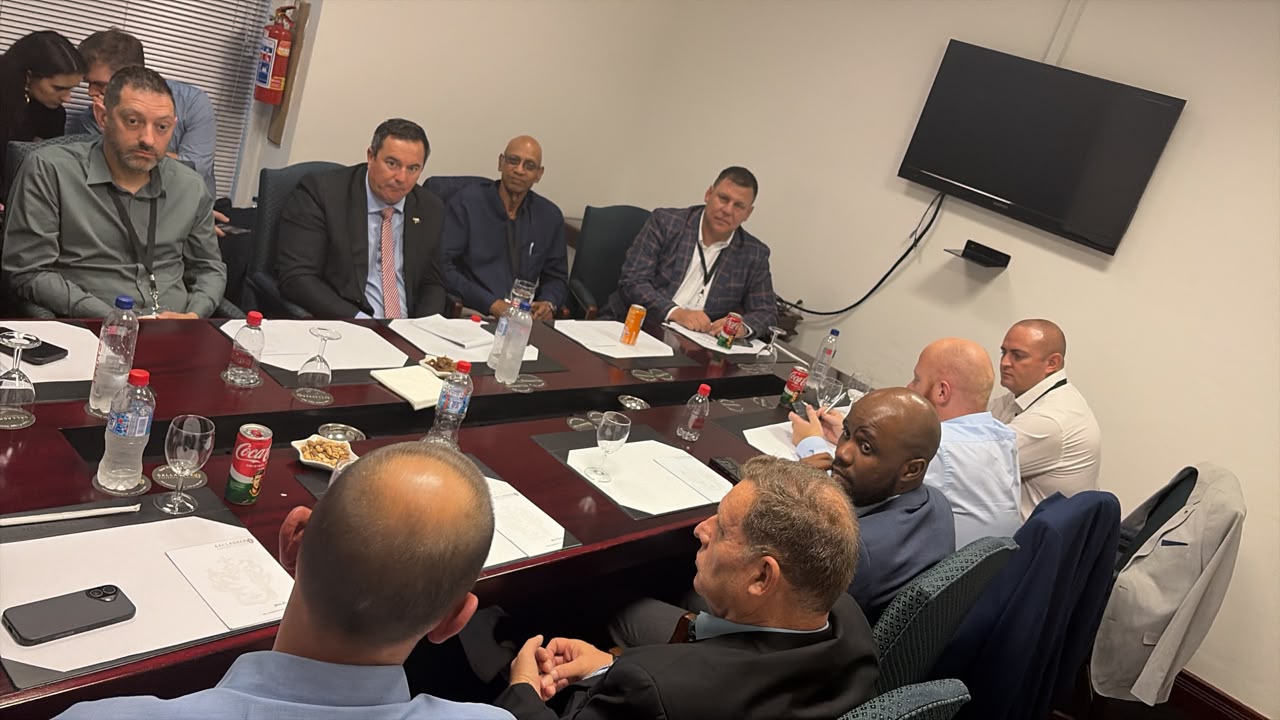
The Retail Motor Industry Organisation (RMI) has reaffirmed the importance of ongoing collaboration between government and the automotive aftermarket in supporting business sustainability, consumer protection, skills development and economic growth.
This was the focus of a roundtable discussion facilitated by RMI Chief Operating Officer Henk Ferreira with Deputy Minister of Trade, Industry and Competition, John Steenhuisen, at Automechanika Johannesburg today.
Representatives from across the RMI’s seven affiliated associations, alongside international industry guests, shared insights into the sector’s operating environment and explored opportunities to work together on practical solutions.
The discussions highlighted the automotive aftermarket’s significant contribution to employment and economic activity, with more than 300,000 people employed across the sector. Its contribution extends well beyond vehicle manufacturing to include dealerships, independent workshops, parts suppliers, tyre retailers, vehicle body repairers, petroleum retailers and the many businesses that support the wider automotive value chain.
“The roundtable provided a valuable opportunity to share the realities of operating across the automotive aftermarket and to explore how government and industry can work together to support a sustainable, competitive and growing sector,” says Ferreira. “By building a shared understanding of the challenges and opportunities, we can identify practical interventions that benefit businesses, consumers and the broader economy.”
Supporting effective regulation and consumer protection
The discussion explored opportunities to strengthen the regulatory environment in areas such as towing services and end-of-life vehicles (ELVs). Participants highlighted the potential for clearer towing regulations to promote consumer choice, improve transparency and support fair competition. Progressing the existing Gauteng regulatory process was identified as a possible starting point for broader national engagement.
The development of South Africa’s ELV policy framework was also discussed, with an emphasis on coordinating existing policy initiatives and drawing on international experience. Improved vehicle traceability and recycling processes could support environmental objectives while helping to prevent illicit parts from re-entering the supply chain.
Participants also shared perspectives on illicit imports of tyres, automotive parts and equipment, highlighting the importance of effective product testing, standards compliance and appropriate importer controls. Further engagement with the South African Bureau of Standards (SABS) was identified as an opportunity to explore ways of strengthening testing capacity and supporting consumer safety.
Exploring funding opportunities for automotive retail
The roundtable provided an opportunity to highlight the funding requirements of the automotive retail and aftermarket sector, which encompasses a diverse range of businesses involved in vehicle sales, servicing, repairs, parts distribution and skills development.
Participants proposed a dedicated engagement between the RMI, industry representatives and relevant funding institutions to build a better understanding of the sector’s needs and explore how existing funding mechanisms could support business development, investment and employment opportunities.
The discussion also touched on the importance of efficient payment processes for businesses servicing government fleets under the RT46 contract. Participants shared concerns about extended payment periods and their impact on business cash flow, as well as the potential implications for the availability of vehicles used in essential public services. Further engagement with the relevant Treasury and contract stakeholders was proposed to help address these challenges.
Building skills and developing the next generation of artisans
Skills development emerged as a key area for collaboration, with participants highlighting the need to expand the pipeline of qualified automotive artisans and strengthen technical career pathways for young people.
The RMI shared its existing apprenticeship and learner development initiatives, together with Recognition of Prior Learning pathways that enable experienced workers to pursue formal recognition of their skills.
The discussion also explored opportunities for vehicle manufacturers and importers to play a greater role in developing the skills required across the broader aftermarket. International collaboration could further support these efforts, with German industry representatives offering to share relevant training content and curricula that could contribute to local skills development.
Promoting responsible business practices and compliance
Participants exchanged views on diesel adulteration and the importance of effective monitoring and enforcement to protect consumers and promote fair competition. The discussion also highlighted the compliance responsibilities carried by legitimate businesses and the value of a consistent regulatory environment across the sector.
Sharing relevant information with the appropriate authorities and continuing engagement with government were identified as important steps towards addressing these concerns.
A platform for continued collaboration
The roundtable identified several areas for further engagement, including towing regulation, automotive standards and testing, funding opportunities, artisan development, government fleet payment processes and diesel adulteration.
Ferreira extended his sincere thanks to the Deputy Minister saying, “These discussions are an important step in strengthening the relationship between government and the automotive aftermarket with the shared objective of strengthening South Africa’s automotive aftermarket and maximising its contribution to the economy. The RMI welcomes opportunities to share industry expertise, learn from international experience and work constructively with government and other stakeholders on solutions that support investment, skills development, consumer protection and sustainable business growth.”
Deputy Minister highlights automotive aftermarket’s role in South Africa’s economic growth
https://t.co/eWdT8hKpjd
#ArriveAlive #Automotive #Aftermarket https://t.co/AuXjtd2MRC
– Arrive Alive (@_ArriveAlive) October 27, 2026