
A steering wheel vibration at highway speed is often dismissed as a minor annoyance. In reality, something as small as a missing wheel-balancing weight can affect driving comfort, tyre wear and vehicle performance. Understanding the role of wheel balancing can help motorists identify issues early and avoid unnecessary wear on tyres and suspension components.
What does wheel balancing correct?
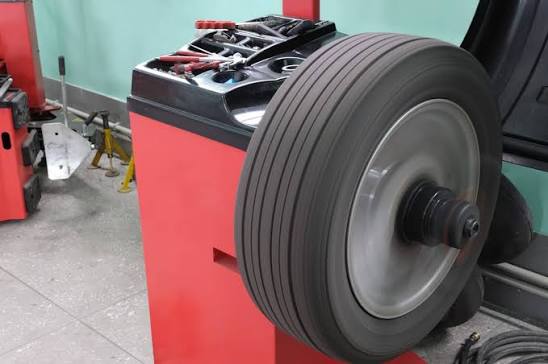
A tyre, rim and valve are manufactured to close tolerances, but their mass is not distributed perfectly around the centre. Once assembled, one area may be slightly heavier than another. A balancing machine measures the rotating assembly and identifies where a technician should add a small counterweight.
Weights may clip onto a suitable rim edge or adhere to the inner surface. Their size and position matter. Each wheel is measured separately, and the technician normally spins it again after fitting the weights to confirm the correction.
Why does a small wheel imbalance cause vibration?
Imagine a washing machine with its contents gathered on one side. The uneven mass produces a repeating movement as the drum turns. A wheel imbalance is much smaller, but the principle is similar: the heavier area repeatedly moves around the centre of rotation.
Drivers often notice the effect within a particular speed range. An imbalance at the front may be felt through the steering wheel, while one at the rear may be felt through the seat or floor. These are useful clues, not a diagnosis.
Is wheel balancing the same as wheel alignment?
No. Balancing deals with how mass is distributed around a rotating tyre-and-wheel assembly. Alignment deals with the angles at which the wheels sit and point relative to the car and road.
A car may need one, both or neither. Pulling to one side, an off-centre steering wheel or certain wear patterns may prompt an alignment and suspension assessment. Speed-related vibration may prompt a balance check, but a tyre professional should also inspect the tyre, rim and mounting.
Can tyre damage feel like poor wheel balance?
Yes. Incorrect pressure, irregular wear, a damaged tyre, a bent rim, dirt trapped between mounting surfaces, or worn steering and suspension parts can also cause vibration. Balancing cannot repair structural damage or correct every source of movement.
Check the tyres for cuts, bulges, exposed material and unusual wear. Prime’s guidance on the dangers of smooth or damaged tyres can help drivers identify visible warning signs.
If vibration begins suddenly, follows an impact, or becomes severe, reduce speed safely and arrange an assessment. Do not keep driving on a visibly damaged tyre.
When should wheels be balanced?
Balancing is normally carried out when a tyre is fitted or refitted. It may also be checked after a puncture repair, tyre rotation, missing wheel weight or vibration complaint. Follow the tyre maker’s and car manufacturer’s guidance rather than relying on one universal interval.
South African potholes and kerb impacts deserve particular attention. An impact may damage a tyre or rim and may also affect alignment or suspension. Information about common car insurance claims explains why road hazards deserve careful attention.
A balance check should therefore form part of a broader inspection after a significant impact.
What Happens If Wheel Balancing Is Ignored?
While a minor imbalance may initially be little more than an inconvenience, prolonged vibration can contribute to increased tyre wear and may place additional stress on steering and suspension components. Early inspection and correction can often prevent unnecessary maintenance costs.
Does wheel balancing prevent tyre wear?
Correct balance can remove one cause of repeated wheel movement, but it cannot guarantee even tyre wear. Pressure, alignment, suspension condition, load, driving style, tyre rotation and road surfaces all influence how a tyre wears.
This is why a complete tyre check matters more than balancing in isolation. A useful set of pre-holiday car checks can help before a longer journey.
Drivers should also use the cold pressures shown on the car’s label or in the owner’s manual, including any different setting specified for a loaded journey.
What should you tell the technician?
Describe where the vibration is felt, the speed at which it starts, whether it changes during braking or cornering, and whether it followed tyre work or a road impact. Mention any warning light, noise, pulling or loss of pressure.
Accurate information helps the technician look beyond balance where necessary. Electronic driver aids are not substitutes for sound tyres and wheels; learning how modern car safety features work helps drivers understand their proper role.
If the car cannot be driven safely, use professional recovery or your provider’s roadside assistance service where this benefit forms part of the applicable cover.
Small weights provide useful information
Wheel weights show how precisely a rotating assembly must be set up. If a weight goes missing or the tyre-and-wheel combination changes, a fresh measurement may be required.
Pay attention to new vibration, but avoid assuming that balancing is the only answer. Slow down if control feels affected and have the tyres, rims, wheel mounting, alignment and relevant suspension parts assessed. Maintenance supports roadworthiness, while comprehensive car insurance may offer financial protection against insured events, subject to the policy terms, conditions and exclusions.
Frequently asked questions
How do I know if a wheel needs balancing?
A vibration that appears within a particular speed range can be a clue, but it is not proof. A tyre professional must measure the tyre-and-wheel assembly and inspect for other causes.
Can a wheel lose a balancing weight?
Yes. Clip-on or adhesive weights can occasionally detach. A new vibration or a visibly missing weight should prompt a balance check.
Do new tyres need balancing?
Normally, yes. Each new tyre changes the mass distribution of the assembly, so it should be measured after fitting.
Can I keep driving with wheel vibration?
Mild vibration still deserves prompt attention. Slow down and stop safely if vibration is severe, steering or braking feels unstable, pressure is falling, or a tyre appears damaged.
 Disclaimer
This article provides general information only. Tyre, wheel, pressure and maintenance requirements differ between cars. Follow the owner’s manual and manufacturer guidance for your model. Wheel balancing, tyre fitting and related inspections should be completed by appropriately equipped professionals. Prime SA is an Auth FSP 41040.
Tyre Checklist/Maintenance and Road Safety
https://t.co/qIIbPvezfK
#ArriveAlive #RoadSafety #TyreSafety #TyreMaintenance https://t.co/KEKIzC4W4t
– Arrive Alive (@_ArriveAlive) October 15, 2026