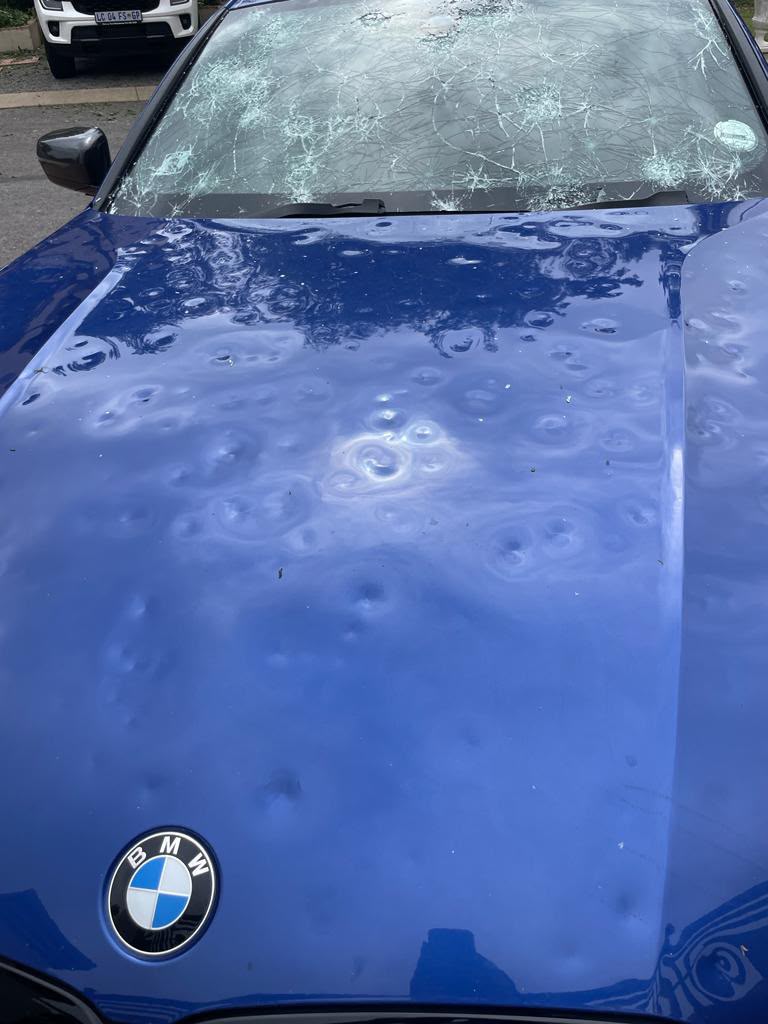
A hailstorm can damage a car in minutes, but the safest response is not always to rush towards shelter. Sudden braking, poor visibility and cars stopping beneath bridges can create a greater immediate danger than dents. Your first priority is to control the car and protect everyone on the road.
Why can hail cause so much damage?
Hail forms inside strong thunderstorms and can fall with heavy rain and gusting wind. The damage to your car is impacted by the size of the hailstones, wind speed, impact angle and time spent exposed all affect the result. The roof, bonnet and boot lid often show dents because they face upwards, while windscreens, mirrors, lights and trim may chip, crack or break.
Two cars in the same area may not suffer identical damage. Their body shapes, materials, positions and nearby shelter all change how the hail strikes. Some dents are easy to see immediately. Others only become visible when light moves across the panel.
What should you do if hail starts while you are driving?
Slow down smoothly, switch on the lights when visibility requires it and increase the following distance. Avoid harsh steering and braking because heavy rain, standing water and reduced grip may accompany the hail. Keep watching for pedestrians, fallen branches and other drivers reacting suddenly.
If safe, move to a properly designed covered area such as a parking structure or filling-station canopy. Do not stop in an active lane, beneath an unsafe tree or where you block traffic. Bridges and underpasses are especially dangerous when cars stop unexpectedly or obstruct lanes. If safe shelter is unavailable, prioritise a controlled journey or a legal stopping place over avoiding cosmetic damage.
Knowing how to respond when conditions change is an important part of driving safely in a hailstorm.
What should you do if a hailstorm approaches while parked at home?
Move your car into a garage or under a solid structure as soon as a storm warning is issued. If you do not have covered parking, use thick blankets or a heavy-duty car cover over the roof, bonnet, and windscreen before the rain and wind arrive. If no cover is available, park next to a wall on the side opposite the incoming storm to block wind-blown hail. Most importantly, finish these preparations before the storm hits-never run outside to move or cover a car while hail is actively falling.
Can you prepare before the storm arrives?
Check official forecasts and warnings before travelling, particularly during the inland summer thunderstorm season. If severe weather is expected, change the departure time when practical or identify safe stopping places along the route. At home or work, use a garage or sound covered parking where available.
A tree may provide shade but can drop branches during strong wind. Consider the structure above the car, drainage around the bay and whether the area remains accessible after heavy rain. These car-parking safety tips can help when choosing a space.
What should you check after a hailstorm?
Wait until conditions are safe, then inspect the car in good light. Check the roof, bonnet, boot lid, windscreen, windows, mirrors, lights, number plates and exterior trim. Look inside for water and examine the dashboard for warnings. Do not climb onto the car or touch loose glass.
Cosmetic dents may not stop a journey. Cracked glass, damaged lights, loose trim or impaired visibility require more care. Do not drive if the windscreen obstructs your view, glass is unstable, a light required for the conditions is not working, or any damaged part may detach. Arrange professional assistance when safe operation is affected.
How should you document the damage?
Photograph the whole car and each damaged area from several angles. Record the date, time, location and weather conditions. Keep any warning notifications and note whether the car was moving or parked. Do not remove damaged parts or authorise repairs before checking the insurance provider’s requirements, unless urgent work is needed to prevent further harm or protect people.
Notify your insurance provider promptly and follow the required claims process, including any instructions for assessment, towing and repair authorisation.
Does car insurance cover hail damage?
Cover depends on the type of insurance selected and the policy terms. Comprehensive car insurance may cover hail damage when weather-related damage is an insured event under the policy. Cover remains subject to the applicable terms, exclusions, limits, excess and claims requirements..
Never assume that windscreen glass, car hire, or every weather-related cost is automatically included. You will also need to pay an excess, which is your contribution towards an accepted claim. Different excesses may apply depending on your policy or the type of damage, so always review how car-insurance excess works and confirm the amount shown in your own policy schedule.
How is hail damage repaired?
A repairer will assess the number, depth and position of dents, the paint condition and access behind each panel. Paintless dent repair may suit some dents where the paint remains intact. Other damage may need conventional panel work, refinishing or replacement. Glass may be repaired or replaced depending on the type, size and location of the damage. Some windscreens contain cameras or sensors used by driver-assistance systems. Replacement may require calibration according to the car manufacturer’s instructions.
Because hailstorms often affect many cars in the same area, repair facilities may experience longer waiting times. Follow your insurance provider’s claims instructions and confirm whether the car may be used while awaiting repairs. Continue driving only if the car is roadworthy, safe to operate and does not have damaged glass, lights, trim or other parts that may affect safety. If there is any concern about the car’s condition, arrange a professional assessment before driving it.
Before relying on car hire or alternative transport, check whether the benefit forms part of the policy and confirm its limits, conditions and availability.
Confirm your insurance provider’s approval process before booking work and keep invoices and repair records. Poor or undocumented repairs may affect later fault assessments and the car’s condition when sold. Car condition, repair quality and supporting records are among the factors that can affect trade-in value, so owners should keep invoices and details of the work completed.
A quick hail-damage checklist
- Check official weather warnings before travelling.
- Choose safe covered parking before the storm where practical.
- Slow down smoothly and leave more following distance in poor conditions.
- Never stop in a live lane or create a hazard to protect the car.
- Photograph damage and check whether the car is safe to drive.
- Contact the insurer before authorising non-urgent repairs.
Frequently asked questions
Should I stop under a bridge during hail?
No, not if doing so blocks a lane or creates a collision risk. Use a legal stopping place or properly designed shelter that you can reach safely.
Can I drive with a hail-damaged windscreen?
Only when visibility and the stability of the glass are not affected. Do not drive if cracking obstructs your view or the glass appears unsafe. Arrange an assessment.
Does comprehensive insurance always cover hail?
No. Cover depends on the policy wording, exclusions, limits, excess and claims requirements. Confirm the protection in your policy schedule.
Should I repair hail dents before contacting my insurer?
Contact the insurer first unless urgent action is needed for safety or to prevent further damage. Unauthorised repairs may affect the claims process.
Hail preparation starts before the first stone falls. Check the forecast, choose safe shelter early and understand your insurance terms. During the storm, protect people before property. Afterwards, document the damage and follow the correct assessment and repair process.
 Disclaimer
This article provides general road-safety, weather-damage and car-insurance information. It does not replace professional advice, manufacturer instructions or an individual policy. Cover for hail, glass, repairs and related benefits depends on the policy selected and its terms, limits, exclusions and excess. Drivers must comply with South African road-traffic laws. Prime SA is an Auth FSP 41040.