
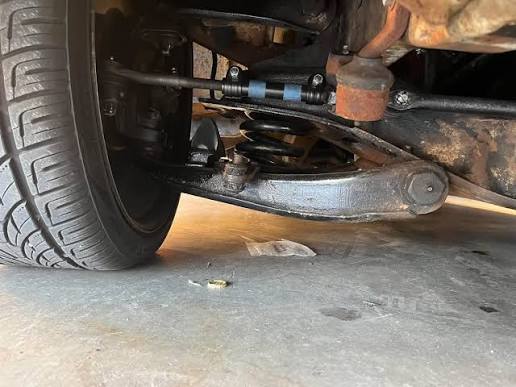
A driver turns the steering wheel, yet the front tyres move through much smaller angles. Between those two actions, a chain of shafts, joints, gears and links converts a hand movement into a change of direction.
The same chain also sends information back to the driver. This is why a new vibration, pull, or change in steering weight can warn you early. Something may need attention.
How does turning the steering wheel change direction
Steering feels immediate because the connected parts respond together. The steering wheel turns a shaft in the steering column. That rotation reaches a steering gear, which converts it into the sideways movement needed at the front of the car. Tie rods carry the movement outwards, and joints at the front wheel assemblies allow them to change angle while the suspension moves.
The driver makes a large, comfortable movement at the steering wheel. The road wheels respond through a smaller angle. This relationship gives the driver enough control to make small corrections without moving the front tyres directly.
Cars use different steering designs, so the exact path varies. Rack-and-pinion steering is common in passenger cars, while other arrangements also exist. The owner’s manual and workshop information for a specific model remain the right reference for its design.
What does the steering column do
The steering column connects the steering wheel to the mechanism lower in the car. It has to pass through a crowded area around the dashboard, pedals and body structure, so it may use joints rather than one straight shaft.
The column also supports controls and adjustment features in many cars. Its construction forms part of the car’s safety engineering, which is one reason steering-column work should be left to suitably qualified technicians. A loose or damaged connection in this path can change how accurately the car responds to the driver.
How does rack-and-pinion steering work
In a rack-and-pinion system, the pinion is a small gear connected to the steering input. It meshes with a straight geared bar called the rack. Turning the pinion moves the rack left or right inside its housing.
Tie rods connect the ends of the rack to the steering parts at the front wheels. Each tie rod includes joints that allow movement as the suspension rises, falls and turns. When the rack moves sideways, the tie rods change the angle of the front wheel assemblies.
This explains why wear in a small joint can be felt at the steering wheel. Extra movement at one connection can create free play, a knock or less precise response. The cause cannot be identified safely from feel alone, because tyres, wheel balance, alignment, suspension and road conditions can produce overlapping symptoms.
Why do the front tyres turn at different angles
During a corner, the inside front tyre follows a smaller circle than the outside front tyre. The inside wheel therefore needs to turn through a slightly greater angle. Steering geometry is designed to create this difference as the driver turns the wheel.
This is an easily missed part of everyday driving. The two front tyres work together, yet they follow separate paths through every bend. Correct geometry helps each tyre roll along its path with less scrubbing across the road surface.
Alignment angles, suspension condition and tyre condition all influence the result. After a hard pothole strike, kerb impact or suspension repair, a change in straight-line behaviour or tyre wear deserves inspection rather than repeated correction at the steering wheel.
Potholes can also cause tyre, wheel or suspension damage and feature among the common causes of car insurance claims
What does power steering add to the process
Power assistance reduces the effort needed to steer. Hydraulic systems use pressurised fluid, while electric power steering uses a motor and electronic control. Some cars combine elements of both approaches. Assistance changes the effort felt by the driver; the mechanical connections and front tyres still have to direct the car.
Electric systems can vary assistance according to speed and other inputs. Parking manoeuvres generally need more assistance because the tyres must turn while the car is moving slowly. At higher speeds, many systems provide a firmer feel so small hand movements produce controlled changes.
Electronic steering can also work alongside modern car safety features, including systems that assist with lane positioning or parking.
Steering weight differs naturally between cars and driving modes. The useful reference is how your own car normally feels. A sudden increase or decrease in assistance, an intermittent change, or a steering warning light should be checked according to the owner’s manual. If the car becomes difficult to control, slow down, stop in a safe place and arrange professional help.
Why does the steering wheel move back towards centre
After a corner, the steering wheel often moves back towards the straight-ahead position as the car travels forward. The effect comes mainly from steering and suspension geometry, tyre forces and the movement of the car. Power steering may also influence how the return feels.
The wheel may not return at the same rate in every corner, and drivers should remain in control rather than allowing it to spin freely through their hands. A clear change in self-centring, especially with pulling, stiffness or uneven tyre wear, can justify an inspection.
How does the road communicate through the steering wheel
Steering works in both directions. The driver sends an input towards the tyres, while forces at the tyre contact patches travel back through the wheel assemblies, suspension and steering components. That feedback helps the driver sense changes in surface and grip.
Coarse tar, gravel, road repairs, standing water and potholes can all change the feel. A brief movement that matches a visible change in the road may be expected. A vibration, pull or looseness that continues on an even surface deserves closer attention.
Power assistance filters some feedback and every model has its own character. Drivers still benefit from learning the normal feel of their own car. Familiarity makes a meaningful change easier to notice early.
How do tyres affect steering response
The steering system can set the direction of the front wheels, but the tyres provide the contact with the road. Their pressure, tread, construction, size, load and condition influence response and grip. Road surface and weather add further variables.
A tyre with low pressure may make the steering feel heavier or less direct. Unequal pressures can contribute to a pull, while damage or unusual wear can produce vibration. These symptoms have several possible causes, so check pressures when the tyres are cold and compare them with the manufacturer’s specification. A tyre specialist or qualified technician should inspect visible damage or persistent changes.
Drivers who regularly travel on damaged roads can also learn more about Prime’s Tyre and Rim Cover, subject to the applicable policy terms, limits and exclusions.
Tyres fitted to the same axle should meet the car manufacturer’s requirements. Changes in size or specification can affect steering, braking and driver-assistance systems. Seek competent advice before departing from the approved specification.
What does wheel alignment change
Wheel alignment refers to measured angles in the steering and suspension geometry. These settings affect how the car tracks, how the steering wheel sits and how the tyres meet the road. Alignment is checked against the manufacturer’s specifications rather than by eye.
Pothole or kerb impacts, worn parts and suspension work can alter the geometry. Common clues include a steering wheel that sits off-centre on a level road, a consistent pull, or uneven tyre wear. Road camber, wind, tyre pressure and loading can also influence straight-line behaviour, so a single symptom does not confirm misalignment.
An alignment adjustment should follow an inspection where wear or damage is suspected. Setting angles around a worn joint may hide part of the problem without correcting its cause.
Which steering changes should a driver take seriously
Steering feel varies between cars, but a sudden or persistent change matters. These signs justify a cautious response:
| Change | What the driver may notice |
| Unexpected free play | The steering wheel moves more than usual before the car changes direction. |
| New vibration | Shaking continues on a reasonably even road or changes with speed. |
| Persistent pulling | The car repeatedly drifts or pulls despite correct tyre pressures and suitable road conditions. |
| Unusual noise | Knocking, clunking, grinding or whining appears while steering. |
| Changed assistance | The wheel becomes unexpectedly heavy, light or inconsistent. |
| Poor self-centring | The steering no longer returns towards centre in its usual way. |
| Warning light | A steering or related dashboard warning remains on or appears while driving. |
These signs do not identify one specific fault. Reduce speed smoothly and avoid abrupt inputs if the steering changes while driving. Stop in a suitable safe place when control is affected, a warning instructs you to stop, or continuing would place anyone at risk. Follow the owner’s manual and arrange an inspection.
What can drivers check themselves
Drivers can monitor tyre pressures, inspect tyres for visible damage, note dashboard warnings and pay attention to how the car behaves on familiar roads. It also helps to notice when a change began, whether it varies with speed, and whether it followed a pothole strike, tyre replacement or repair.
Tyre pressure, visible damage and steering feel can also form part of a broader pre-trip car checklist before a longer journey.
Steering, suspension and restraint-related components require the correct equipment and technical knowledge. Avoid loosening, adjusting or lubricating parts without model-specific instructions and suitable competence. Routine servicing provides an opportunity to inspect joints, protective boots, fluid where applicable, tyres and related components.
The steering wheel is also a source of information
The journey from the steering wheel to the front tyres takes place through several connected systems. Just as importantly, the path carries information back to the driver. The feel through your hands can reveal a change before it becomes obvious elsewhere.
Learning the normal weight, response and self-centring of your own car gives you a useful reference. When something changes, check the simple factors such as tyre pressure and visible damage, then arrange qualified help where the cause is unclear or safety may be affected.
Maintenance and insurance serve different purposes. Regular inspections support roadworthiness, while suitable comprehensive car insurance may provide financial protection against insured events, subject to the policy’s terms, conditions and exclusions.
Frequently asked questions
What connects the steering wheel to the front tyres?
The connection usually includes the steering column, steering gear or rack, tie rods and joints at the front wheel assemblies. The exact layout depends on the car.
Why do the front tyres turn at different angles?
The inside tyre follows a tighter path through a corner, so the steering geometry turns it slightly more than the outside tyre.
Why does steering feel lighter when parking?
Many power-steering systems provide more assistance at low speed, when turning the tyres requires greater effort. The amount and method of assistance depend on the car.
Can a pothole affect steering?
A hard impact can damage a tyre, wheel, steering or suspension part, or alter alignment. Check for new pulling, vibration, noise, warning lights or an off-centre steering wheel.
Does pulling always mean the wheel alignment is wrong?
No single symptom confirms the cause. Tyre pressure, tyre condition, road camber, wind, brakes, loading, suspension and alignment can all influence how a car tracks.
When should I stop driving because of a steering problem?
Stop safely when steering control is affected, the wheel becomes unexpectedly difficult to turn, a warning directs you to stop, or the car cannot hold a predictable path. Arrange professional assistance.
If the car cannot be driven safely, contact a professional recovery service or your provider’s roadside assistance service where this forms part of your cover.
 Disclaimer
This article provides general information and does not replace the instructions for a specific car or advice from a qualified technician. Always follow the owner’s manual and manufacturer guidance on steering, suspension, tyres, wheel alignment and maintenance. Do not drive a car when its steering or road behaviour appears unsafe. Drivers must comply with applicable road laws and adjust their driving to road, traffic and weather conditions. Prime SA is an Auth FSP 41040.