
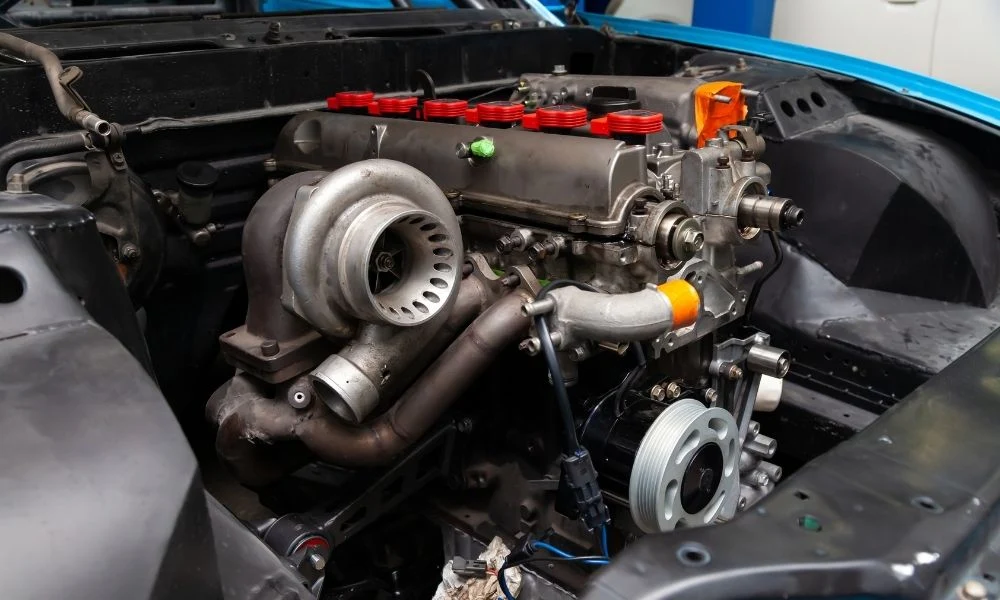
Two cars with similar engine sizes can respond very differently when the driver presses the accelerator. One may build speed steadily, while another produces a stronger pull much earlier. A turbocharger can help explain that difference.
A turbo uses energy in the exhaust flow to compress air entering the engine. This allows the engine-management system to add an appropriate amount of fuel and produce more power or torque from a relatively compact engine.
The useful insight is that a turbo does not create one universal driving feel. The response a driver notices comes from the turbocharger, engine controls and gearbox working together.
How does a turbocharger work?
Exhaust gases leaving the engine pass through a turbine. The turbine connects by a shaft to a compressor on the intake side. As the turbine turns, the compressor pushes a greater mass of air into the engine.
Sensors and electronic controls manage pressure, fuel delivery and engine protection. The driver does not control boost directly. Pressing the accelerator requests more output, and the car coordinates the systems needed to provide it within the engine’s operating limits.
Why can a small turbo engine feel strong?
Engine size alone no longer tells the full story. Many turbocharged engines deliver useful torque across the lower and middle engine speeds used in everyday traffic. This can make a compact engine feel responsive without needing very high revs.
The exact response depends on the engine, turbo size, gearbox, driving mode and electronic calibration. Drivers comparing models can read more about whether they should buy a turbocharged car in South Africa.
What does turbo lag feel like?
Turbo lag is the delay between asking for stronger acceleration and receiving the intended turbo response. The turbo needs sufficient exhaust flow, while an automatic gearbox may also change down before the car accelerates strongly.
In some cars, the transition is barely noticeable. In others, the response builds more clearly. Allow for the behaviour of your own car when joining fast traffic or overtaking. Avoid assuming that the same accelerator movement will produce the same result in every gear or at every engine speed.
Why does the gearbox change the driving experience?
The gearbox determines the engine speed available at a given road speed. When the driver asks for more acceleration, an automatic gearbox may select a lower gear while the turbocharger builds pressure. These changes can feel like one surge from the driver’s seat.
A manual car places more of that choice with the driver. Selecting a gear that is too high for the speed may make response feel slow, even when the engine can produce strong torque in a more suitable operating range. Follow the manufacturer’s driving guidance.
Why This Matters in South Africa
South African drivers regularly travel between coastal and inland regions, creating conditions where differences between naturally aspirated and turbocharged engines may become noticeable.
For example, a vehicle driven in Durban may feel different when driven in Johannesburg because of differences in air density and elevation.
Understanding this behaviour can help drivers recognise normal operating characteristics rather than assuming a fault exists.
Do turbocharged cars perform differently at altitude?
Air pressure and density decrease as elevation rises. A naturally aspirated engine depends directly on the surrounding atmosphere to fill its cylinders. A turbocharged engine compresses intake air and may compensate for part of the reduced pressure within its design limits.
This is relevant on the Highveld, including Johannesburg at roughly 1,750 metres above sea level. It does not mean turbocharged performance remains identical at every elevation. Temperature, fuel, engine controls and the turbo system’s limits still matter.
Does a turbocharger always save fuel?
No. Turbocharging can allow a smaller engine to provide useful performance when required. However, stronger output needs additional air and fuel. Frequent hard acceleration can therefore increase consumption.
Real-world fuel use depends on speed, traffic, terrain, load, gearbox behaviour and driving style. Lists of fuel-efficient cars in South Africa can help with initial research, although actual consumption will vary.
Turbocharging is an engineering tool, not a guarantee of lower fuel use. Compare official figures carefully and consider how the car will be driven.
Why do oil and servicing matter?
A turbocharger operates at high rotational speed beside hot exhaust gases. Engine oil may lubricate and help manage heat around its rotating assembly. Using the wrong oil or extending service intervals can conflict with the engine’s design requirements.
Use the exact specification in the owner’s manual. Prime’s guide to choosing the correct engine oil explains why the letters and numbers on the container matter.
An accurate car service history helps owners and buyers understand how consistently maintenance was completed.
Drivers comparing ownership options should also understand the difference between warranties, service plans and maintenance plans.
Which changes need professional attention?
A new loss of power, warning light, unusual smoke, persistent whistle, rattling sound, oil leak or sudden change in acceleration deserves attention. These signs do not confirm that the turbocharger itself has failed, because intake, exhaust, fuel and electronic faults can create similar symptoms.
Reduce demand on the engine and follow any dashboard instruction. Stop safely if the car loses power unpredictably, overheats, produces heavy smoke or cannot be driven safely. Arrange a qualified inspection instead of trying to diagnose the problem from one symptom.
What should used-car buyers check?
A test drive should show whether acceleration is smooth and predictable. Review warning lights, oil level, visible leaks and service records. Confirm the correct fuel and oil specifications, and arrange an independent inspection where appropriate.
A broader guide to buying a used car in South Africa provides further checks beyond the engine.
A turbocharged engine is not automatically unreliable or expensive to own. Condition, maintenance history, design and previous use matter more than the word turbo on its own.
What creates the overall driving feel?
A turbocharger helps a compact engine move more air and produce useful output. The driver experiences the combined work of the turbo, engine management and gearbox through accelerator response.
Learn how your car responds before relying on strong acceleration in traffic. Follow its fuel, oil and servicing requirements, and have unexpected changes assessed promptly.
Frequently asked questions
What is turbo lag?
Turbo lag is the short delay between requesting more power and receiving the intended turbo response. Gear selection and engine speed also influence what the driver feels.
Are all turbocharged cars fast?
No. Manufacturers use turbochargers for different purposes, including everyday torque, efficiency strategies and higher performance. The complete engine and gearbox design determines the result.
Do turbocharged cars use more fuel?
Fuel use depends on the car and how it is driven. A small turbo engine can operate efficiently under light demand, while frequent strong acceleration requires more fuel.
Does a turbocharged engine need special oil?
It needs oil that meets the manufacturer’s exact specification. Use the owner’s manual rather than choosing oil only by brand, price or viscosity shown on the container.
 Disclaimer
This article provides general information only. Turbocharger, engine oil, fuel, cooling, operating and maintenance requirements differ between cars. Follow the owner’s manual and manufacturer guidance for your model. Warning lights, smoke, overheating or unexpected power loss should be assessed by an appropriately qualified professional. Prime SA is an Auth FSP 41040.