
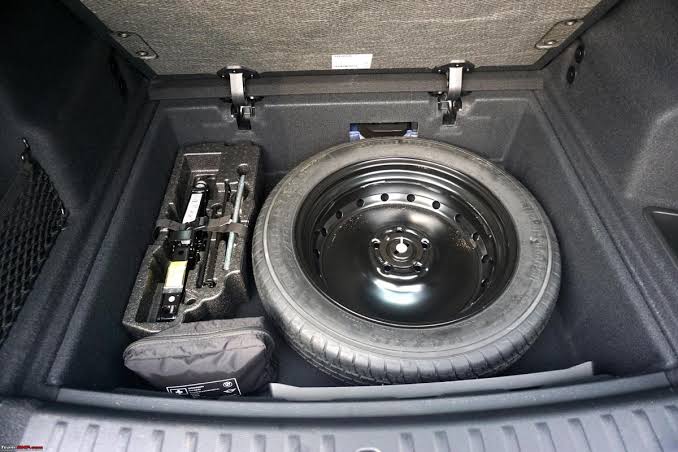
A spare tyre may travel with your car for years without touching the road. When a puncture happens, however, it becomes one of the most important items in the boot.
The key point is that not every spare is a replacement tyre. A temporary space-saver or puncture repair kit is designed to help with certain problems under specific restrictions. It may only provide enough mobility to reach a suitable place for professional tyre attention.
Drivers should know which puncture solution their car carries, where it is stored and what limits apply before an emergency happens.
What type of spare does your car have?
A full-size spare is generally similar in size to the tyres fitted to the car. Its wheel may look different, but the tyre must still meet the manufacturer’s specifications. Whether normal driving can resume depends on the exact tyre, wheel and manufacturer guidance.
A temporary spare is narrower and easier to store. It normally carries speed, distance or other operating restrictions. Read the markings on the spare and the relevant owner’s manual section rather than applying a general limit from another car.
Why is a spare tyre only temporary?
A spare tyre is built to restore limited mobility while the damaged tyre is repaired or replaced. Its size, construction and available grip may differ from the normal tyres. Steering, braking and cornering may therefore feel different.
Stay within every stated restriction. Drive gently, allow more room and arrange tyre attention promptly. If the car feels unstable, a warning appears or the temporary tyre loses pressure, stop safely and seek professional help.
Why This Matters for South African Drivers
South African motorists frequently travel long distances, often through remote areas where immediate roadside assistance may not be available. Understanding how a spare tyre, repair kit or run-flat system works before a journey can help drivers make safer decisions when a puncture occurs.
Many drivers only discover the limitations of their emergency tyre solution when they need it most. A quick inspection before travelling can help avoid unnecessary delays and roadside risks.
What if your car has no spare tyre?
Some cars use a puncture repair kit, tyre mobility system or run-flat tyres instead of a spare wheel. A kit may contain sealant and an inflator, but it is not suitable for every type of damage. Sidewall damage, a large puncture or a damaged rim may fall outside its intended use.
Sealant can also have an expiry date. Run-flat tyres have model-specific speed and distance limits after pressure loss. Follow the instructions supplied with the car and tyre system. Manufacturer guidance confirms whether the damaged tyre can be repaired and what should happen next.
Does an unused spare tyre still need checks?
Yes. A spare can lose pressure and age while stored. A temporary spare may require a much higher pressure than the normal tyres, so use the specified figure rather than guessing. Check it when the normal tyres are inspected and before a long trip.
Look for cracking, cuts, bulges or other visible deterioration. Tread depth alone does not show the full condition of an old spare. Prime’s guide to the dangers of smooth or damaged tyres explains other warning signs to look for.
Ask a tyre professional to assess age or damage and follow the tyre maker’s replacement guidance.
What tools do you need to fit a spare wheel?
A spare wheel is useful only if the correct equipment is present and usable. Depending on the car, this may include a jack, wheel wrench, towing eye and locking-wheel-nut key. The owner’s manual identifies the approved jacking points and procedure.
Check that these items remain in their proper storage positions. A broader list of useful things to keep in your car can help drivers prepare for roadside problems.
Changing a wheel beside moving traffic creates serious risk. Move as far from traffic as safely possible. If the location, surface, weather or your ability makes the task unsafe, arrange assistance.
The Cost of Not Checking Your Spare
Drivers often maintain their road tyres but forget about the spare wheel stored beneath the boot floor.
A spare tyre with low pressure, visible deterioration or missing support equipment may be unusable during an emergency. Discovering these problems after a puncture can lead to recovery costs, travel delays and additional inconvenience.
Regular inspections can help identify issues before they become a problem.
Can a repair kit fix every puncture?
No. Repair systems are intended for particular damage and operating conditions. They should not be used as a universal solution for torn sidewalls, damaged wheels or every loss of pressure.
After a pothole or hard road impact, inspect more than the air pressure. The tyre, rim and suspension may need attention. Prime’s explanation of common car insurance claims includes risks associated with poor road conditions.
A qualified tyre professional should decide whether the normal tyre can be repaired or must be replaced.
What should you check before a long journey?
Confirm whether the car has a full-size spare, repair kit or run-flat system. Check pressure and condition, locate the tools and locking-wheel-nut key, and read the operating instructions. Add this to your pre-holiday road-trip checks before travelling far from home.
Include the spare or mobility kit in your broader car maintenance checklist throughout the year.
Keep luggage arranged so the equipment can be reached without unloading belongings into traffic.
Should used-car buyers inspect the spare wheel?
Yes. A used car may be missing its spare, jack, tools, locking key or repair kit. The supplied equipment may also be unsuitable for that model or beyond its service life.
Checking the boot is a useful part of buying a used car in South Africa before completing the purchase.
Confirm the original specification through the owner’s manual or manufacturer. Replacing missing equipment after purchase may involve more than buying any wheel that fits in the storage well.
What is the spare tyre really designed to do?
A spare tyre or repair system is there to manage a tyre problem in the way the manufacturer intended. It does not make every damaged tyre safe to continue using.
Know what your car carries, keep it serviceable and understand its limits. That preparation makes it easier to choose the safest next step when a puncture interrupts the journey.
Frequently asked questions
How fast can I drive on a space-saver tyre?
Use the maximum speed printed on the spare or stated in the owner’s manual. Limits differ, so never rely on a figure remembered from another car.
How long can I use a temporary spare tyre?
Only for the distance and purpose allowed by the manufacturer. Arrange repair or replacement of the normal tyre as soon as practical.
Why does my spare tyre need a different pressure?
Temporary spares have different dimensions and construction. Use the pressure specified for that spare, not the normal tyre pressure or a guessed figure.
Can I use a puncture repair kit on sidewall damage?
Many kits are not designed for sidewall damage or large punctures. Follow the kit instructions and arrange professional recovery when the damage falls outside them.
 Disclaimer
This article provides general information only. Spare tyre, pressure, puncture repair, jacking and operating requirements differ between cars. Follow the owner’s manual, tyre markings and manufacturer instructions for your model and equipment. Tyre damage should be assessed by an appropriately qualified tyre professional. Prime SA is an Auth FSP 41040.